Showing posts with label Toxicology. Show all posts

Learn It: Angioedema

Angioedema


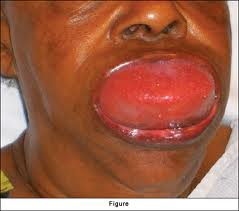
Sometimes referred to as Quinke's Edema, angioedema is that swelling we see that is most apparent around the mucosal areas of the face.  Consider Hives as swelling on the surface of the skin, and angioedema as swelling beneath the skin.  


The most common cause of this type of swelling without the presence of Hives is hypersensitivity to ACE inhibitors.  

ACE = Angiotensin converting enzyme.  This converts angiotensin one into angiotensin two.  

ACE inhibitors block ACE.

Bradykinin is a peptide that has a role with all forms of angioedema.  It is a potent vasodilator that increases permeability and allows the accumulation of fluid within the interstitial space.  

ACE is one of the main ways that bradykinin is degraded.  So when we inhibit the production of ACE, we are then inhibiting the degradation of bradykinin.  We then have this run away peptide and subsequent swelling.  

Many patients that suddenly present with severe angioedema have been taking ACE inhibitors, such as lisinopril, for a long period of time.  They may have never had any issues before, but out of no where have this severe reaction.  This type of reaction is most common in the African-American population, but may occur in anyone.  

There are other types of angioedema, including the traditional allergic reaction.  Those are more well known and prepared for.  


Treatment

As you can see from the pictures above, swelling may be within the oropharynx.  This can cause an airway obstruction, and aggressive airway management should be advocated.  

This patients may be obtunded and snoring as you enter the scene.  They have been confused for diabetics, or acute coronary syndrome patients due to their initial impression.  

It is common for these patients to undergo cricothyrotomy due to complete glottic obstruction.  Moving quickly is imperative to prevent severe hypoxia and cardiorespiratory arrest.

The usual drugs used for anaphylactic reactions are indicated.

- Epinephrine to reduce the vasodilation.  
- Crticosteroids & antihistamines.  


So the next time you run on a patient that is presenting with swelling in the absence of hives, think angioedema, and act fast!



The vomiting toddler


You just received a dispatch to a working class neighborhood townhouse for a two year old vomiting. Great. Another BS call. "Why does a parent call EMS because her kid is simply vomiting?", you ask your partner as you pull up the residence. The residence appears neat on the outside but the inside is cluttered but clean. The mother, obviously pregnant in her third trimester, holding the girl, tells you her daughter has been vomiting for the past hour or so and also had diarrhea. She apologized for calling you but she was concerned that the child had emesis x5 in the short time she was sick, and she was not sure but felt she saw blood in her liquid stool. Not only that, she says she is not acting right. She would have taken her to the hospital herself but she is snowed in from the heavy snow fall.


As you approach the child, she makes eye contact with you but seems a little listless and pale. She appears to be of normal weight and build for a 2 year old. She lets you take vitals with mother present. R24, normal and non labored; PaO2 98%; P110, S/R; BP 80/p (you still haven't whipped out the bad habit of your partner of getting a palp pressure as an initial on scene pressure); T 37C. Skin is a warm and dry with poor turger and cap refill of 3 seconds.


Mother states the patient has no PMX, was born full term with no complications or congenital defects, and immunizations are up to date. Mom stated the child ate breakfast of cereal and had a P&J sandwich for lunch with chocolate milk. In fact, she says embarrassingly, that she found her already awake in the kitchen helping herself to a box of Count Chocula when she awoke in the morning, with pantry cabinets open. When asked about potential ingestion of cleaning materials, she stated no, as they are under the sink secured by a latch that the child has not yet been able to open.


What other scene survey and/or patient assessment findings would you like to know?


So, what is the differential diagnoses?


What prehospital treatment does this kid need?


What is the appropriate destination for this kid?


If you have a suspicion, who will you call for consult?


What treatment will this kid get in the ER?

Coumadin case

Here is a case where you need to think and act outside the traditional area of your education.

A 68 year old female patient with osteoarthritis was discharged from the hospital following surgery for a proximal fractured femur, at the greater trochanter. The patient's physician ordered 5 mg of coumadin P.O. daily four days ago. The patient was not sure if she took her medication one day, so she took twice the amount the next day. And then took twice the amount the day after that. Her daughter, a nursing administrator by trade, arrived to check on her mother, and after questioning her mother's ability to self medicate appropriately, counted the tablets and found three missing, and assumed her mother took them. Instead of calling her mother's physician, she calls an ambulance.

You respond and find the patient laying in bed, alert and oriented with vitals all withing normal limits.

1. Why was this patient prescribed coumadin and what is the normal dosage range? What are the pharmacodynamics of this medication?

2. What are the possible consequences of the patient taking too much Coumadin?

3. What should you assess for or warn the patient about since she has taken a large dose of the medication?

4. What do you need to teach the patient regarding her medication, especially in regards to missing a dose or managing her medications at home?

5. What labs should the patient's physician be monitoring? What will be the therapeutic range?

6. Does this patient need to go to the hospital? If not, what assessment findings would warrant an ED visit? If so, what laboratory values will the hospital check? Is there anyone you should call for advice or is this an automatic transfer to an ED? If the patient needs seen or stat lab work, is the ED the only option for this patient?